
Construction Site Safety in Nepal: 5 Practical Ways to Save Lives and Essential Checklist
Construction sites in Nepal are among the most hazardous workplaces. Every year, many workers lose their lives or suffer serious injuries due to falls from height, collapsing scaffolding, trench collapses, electric shocks, and lack of proper protective equipment. According to various studies and reports on Nepal’s construction industry, poor safety practices remain a major challenge despite growing awareness.
The good news? Most accidents are preventable. By implementing simple, practical safety measures, contractors, engineers, and site owners can significantly reduce risks and protect lives. Here are 5 essential ways to save lives on construction sites in Nepal, along with a ready-to-use checklist.
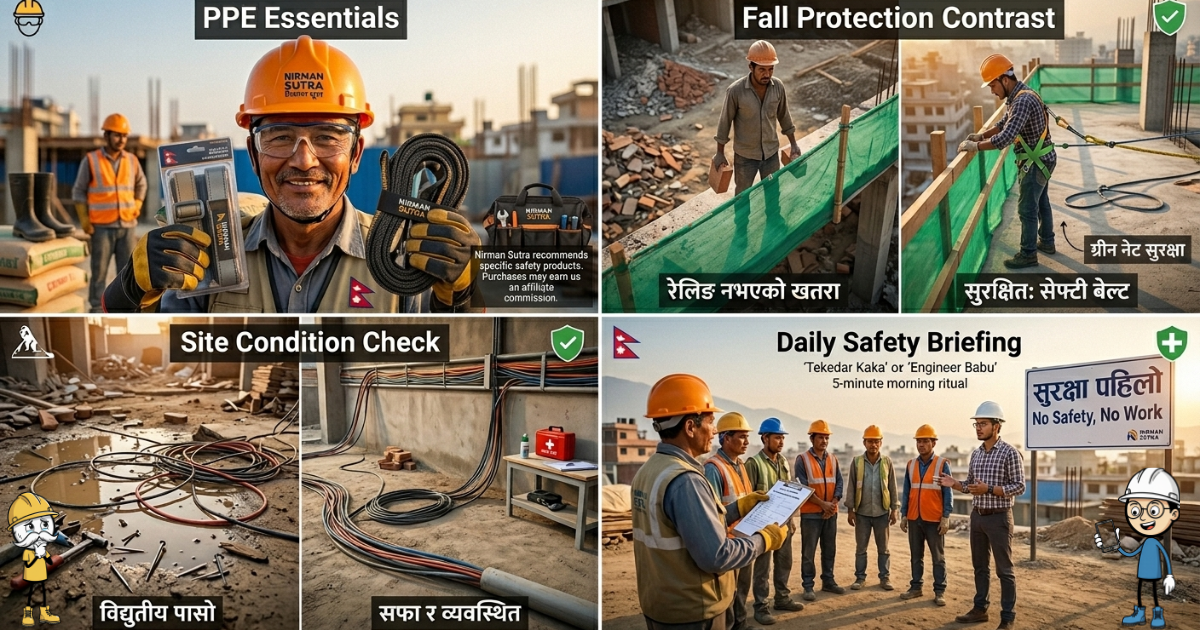
1. Mandatory Use of Personal Protective Equipment (PPE)
PPE is the first and most basic line of defense. Many accidents happen simply because workers are not wearing proper gear.
Key items to enforce on every site:
- Safety Helmet (Hard Hat): Must be worn by everyone on site at all times.
- Safety Shoes/Boots: With steel toes to protect against falling objects and nails.
- Reflective Jacket/Vest: Especially important for visibility during low-light or busy traffic areas.
- Safety Gloves: For handling materials, cement, and sharp objects.
- Eye Protection (Goggles): To guard against dust, cement particles, and flying debris.
- Safety Harness and Belts: Compulsory for all work at height (above 2 meters).
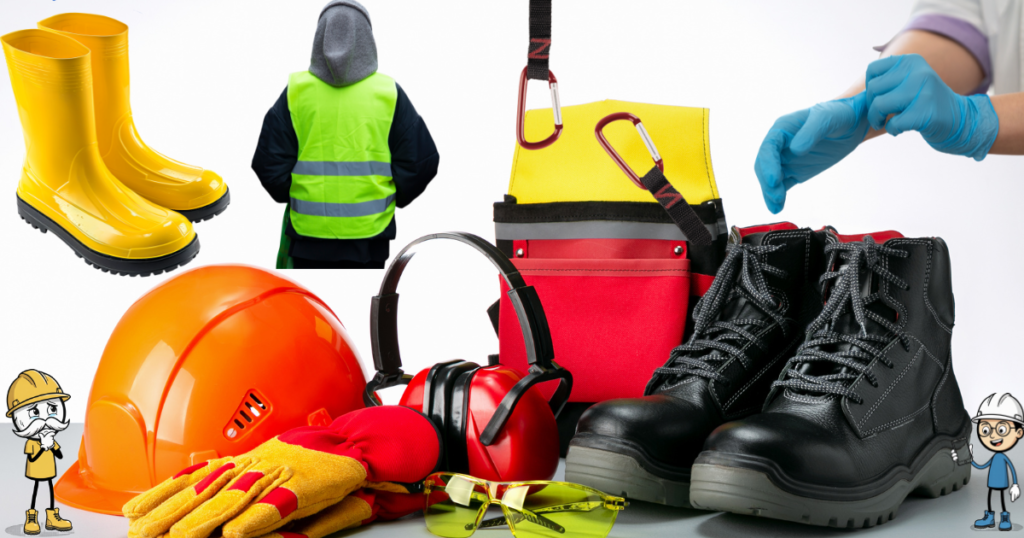
Safety Tip for Nepal: Construction in hilly or rainy regions requires strict PPE protocols. Always provide high-quality rain gear and non-slip boots to prevent site accidents. Establish a “No PPE, No Entry” rule with clear signage and mandatory training. For a complete safety and legal checklist, read our full guide: House Construction Agreement: 7 Costly Mistakes to Avoid in 2026 — Nirman Sutra
2. Safe Scaffolding and Fall Protection
Falls from height are the leading cause of fatal accidents on construction sites worldwide, including in Nepal.
Life-saving practices:
- Use only properly designed and inspected scaffolding. Never use bamboo scaffolding without proper tying and bracing (common but risky in Nepal).
- Install guardrails, toe boards, and safety nets on all open edges.
- Provide full-body safety harnesses with secure anchorage points for workers on roofs, slabs, or multi-story work.
- Inspect scaffolding daily before work starts and after rain or strong winds.
Pro Tip: For buildings over 4 storeys, follow Nepal Building Code (NBC) guidelines for multiple access points and sturdy platforms.
3. Proper Excavation and Trench Safety
Trench collapses can bury workers in seconds. Nepal’s varied soil conditions (from soft alluvial soil in Terai to rocky hills) make this especially dangerous.
Essential measures:
- For trenches deeper than 1.5 meters, provide proper shoring, sloping, or benching to prevent collapse.
- Keep excavated soil at least 1 meter away from the edge.
- Provide safe ladders or ramps for entry/exit every 20 meters in longer trenches.
- Never allow workers to enter unsupported deep excavations.
- Monitor for underground utilities (electricity, water, gas) before digging.
Always have a competent person inspect the trench daily.
4. Electrical and Fire Safety
Electric shocks and fires are common due to temporary wiring and flammable materials on sites.
Key precautions:
- Use only weatherproof, properly insulated cables and distribution boards.
- Ground all electrical equipment and avoid overloading.
- Keep a safe distance from overhead power lines.
- Provide fire extinguishers (ABC type) at multiple visible locations.
- Ensure at least one (or two for taller buildings) clear fire escape route as per NBC 107 and NBC 114 standards.
- Ban smoking and open flames near flammable storage.
5. Training, Supervision, and Health Monitoring
Safety is not just equipment — it’s culture.
What to implement:
- Conduct regular toolbox talks (short daily safety meetings) on specific hazards.
- Train all workers on emergency procedures, first aid, and hazard recognition.
- Appoint a dedicated safety supervisor on larger sites.
- For contractors with more than 20 workers, form a Safety and Health Committee as per Nepal’s Labor Act 2074.
- Monitor worker health — provide rest in extreme heat/cold, dust masks for cement work, and proper hydration.
Regular medical check-ups can catch issues early.
Construction Site Safety Checklist (Free Downloadable Style)
Use this daily/weekly checklist before starting work:
General Site:
- Site is properly fenced and warning signs displayed?
- First aid kit fully stocked and easily accessible?
- Emergency contact numbers posted?
PPE Compliance:
- All workers wearing helmet, boots, and reflective vest?
- Harness and lanyards in good condition for height work?
Scaffolding & Heights:
- Scaffolding inspected and tagged safe today?
- Guardrails installed on all open edges?
- No one working without harness above 2m?
Excavation:
- Trenches properly shored or sloped?
- Safe access provided?
- No loose soil near edges?
Electrical & Fire:
- Temporary wiring safe and grounded?
- Fire extinguishers available and not expired?
- Clear fire escape routes?
Housekeeping:
- Site clean — no scattered debris, nails, or tripping hazards?
- Materials stacked safely?
- Waste removed regularly?
Documentation:
- Safety training records up to date?
- Incident reporting system in place?
Mark “Yes/No” daily. Correct issues immediately.
Why Safety Matters in Nepal’s Construction Boom
With rapid urbanization and housing demand across Kathmandu, Pokhara, and other cities, construction sites are multiplying. Cutting corners on safety may save a few rupees today but can lead to tragic losses, legal penalties, project delays, and higher insurance costs.
Following Nepal Building Code (NBC 114-1994 for general safety, NBC 107 for fire), Labor Act 2074, and basic international best practices can save lives and make your project more professional.
Final Advice: Safety is the responsibility of everyone — owner, contractor, engineer, and worker. Invest in proper training and equipment from day one. A safe site is a productive and reputable site.
If you’re planning or running a construction project in Nepal, prioritize these 5 measures and use the checklist regularly. Lives are more valuable than any deadline or budget saving.
Share this with your team and contractors. For professional house design, estimation, or safety consultation services in Nepal, feel free to reach out.
Stay safe, build responsibly.
What are the most common causes of accidents on construction sites in Nepal?
The leading causes include falls from height, scaffolding collapse, trench/excavation failures, electric shocks, and struck-by objects. Many accidents happen due to lack of proper PPE, poor supervision, use of unsafe bamboo scaffolding, and insufficient training. Most of these are preventable with basic safety measures.
Is it mandatory to follow safety standards on construction sites in Nepal?
Yes. Contractors and site owners must follow the Nepal Building Code NBC 114:1994 (Construction Safety), along with the Labor Act 2074. For sites with more than 20 workers, forming a Safety and Health Committee is required. Non-compliance can lead to legal penalties, project delays, and compensation claims.
What PPE is mandatory for workers on a construction site in Nepal?
Every worker must wear a safety helmet, safety shoes/boots, reflective jacket, and gloves. For work above 2 meters, a full-body safety harness with lanyard is compulsory. Eye protection, dust masks, and non-slip boots are highly recommended, especially during rainy seasons or cement work.