

Saving the “Skin” of Your House: 7 Mistakes You Must Avoid During Plastering
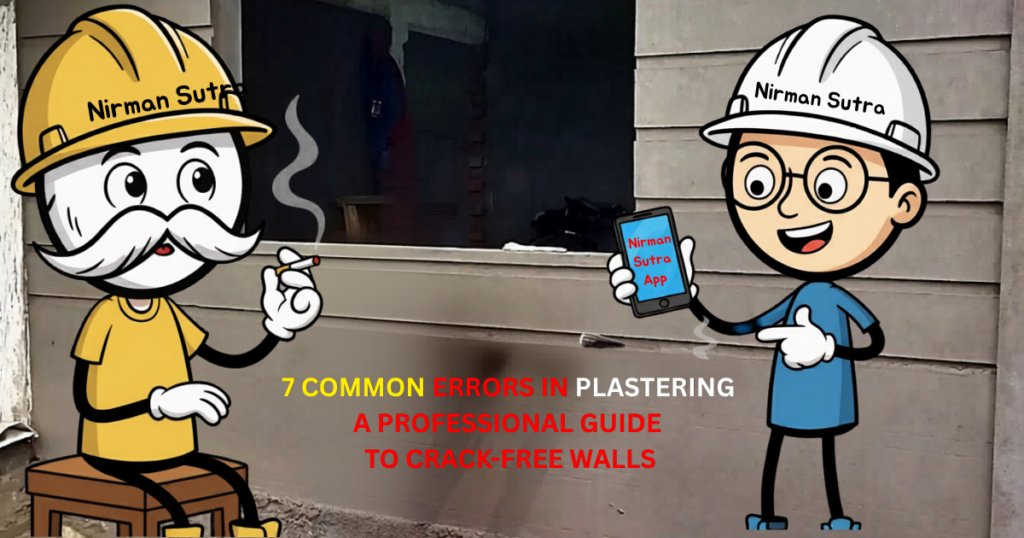
A construction site in Bhaktapur. The sun is blazing hot. Contractor Kaka sits on his old wooden chair, sipping tea. Nearby, the young engineer arrives, looking puzzled with drawings and an IS Code book in his hand. The masons are busy troweling plaster while sand dust flies around.
Contractor Kaka (sipping tea and smiling): Hey son! You’re late today. Does that thick college book tell you about the quality of this sand? Look, the sand the owner brought has almost half soil mixed in it. If you plaster with this, the walls will start peeling off and might even fall on the owner’s head tomorrow! (He grabs a handful of sand and shows it to the engineer.)
Engineer Babu (opening his notebook and flipping through the book): You’re right, Kaka. According to IS 1542, the silt (soil) content in plaster sand should be less than 5%. Too much silt means poor bonding with cement, and shrinkage cracks will appear later. Even Nepal’s National Building Code (NBC 205) says the sand must be clean and fine.
Contractor Kaka (jokingly): Son, forget the book for a moment and take a handful of sand yourself. If too much dust sticks to your hand, understand that the sand is useless. You must sieve it properly with a mesh. I’ve been on sites for 26 years and have seen this mistake in hundreds of houses in Bhaktapur. Always check the sand first, otherwise the “skin” of the house will be weak.
(Both put down their tea glasses and stand at the edge of the site. A mason is plastering a pillar. The sun has heated his head. Kaka lights a cigarette.)
1. The Tea-Time Chat and the Sand Problem
Contractor Kaka: Son, plaster is the “skin” of the house. If the skin isn’t good, the house won’t look beautiful, water will seep in, and it will feel damp. But if the sand is bad, no matter how much cement you use, it won’t stick properly. Sand mixed with soil weakens the mix — it absorbs water and cracks when it dries.
Engineer Babu: Exactly, Kaka. Scientifically, high silt content reduces cohesion. Follow the NBC guidelines and test the sand properly.
(Link: Download Nepal’s National Building Code NBC 205 Detailing Guideline here – https://giwmscdnone.gov.np/media/pdf_upload/NBC_205_READY-TO-USE_DETAILING_GUIDELINE_FOR-signed.pdf)
Contractor Kaka’s Pro Tip: Buy a good sieve before purchasing sand. Mason brother, sieve this sand again before using it, or Kaka will scold you!
2. Does Adding More Cement Make It Stronger? (The Rich Mix Myth)
Engineer Babu: Kaka, the mason is mixing 1 bag of cement with only 3 bags of sand. Isn’t that too rich? This kind of “rich mix” actually creates more problems.
Contractor Kaka (laughing): Yes, son! These masons think the owner will be happy if they use more cement. But too much cement invites more cracks. For outer walls, a 1:4 ratio is fine, and for inner walls, 1:5 or 1:6 is enough. Excess cement causes too much shrinkage.
Engineer Babu: Kaka, keep the water-cement ratio below 0.45. It’s better to use PPC cement for plastering.
Contractor Kaka: And never buy cheap or old stock cement.
Want to know exactly how much cement and sand you need? Use our simple tool 👇
→ Go to tools.nirmansutra.com and try the Plaster Calculator
3. The Fight Between Pillars and Bricks (Junction Cracks)
Engineer Babu: Kaka, look here! There’s already a gap appearing at the joint between the pillar and the brick wall. You must use chicken mesh (or alkali-resistant fiber mesh) here.
Contractor Kaka (laughing): Son, when I talk about mesh, the masons complain that I’m adding extra work for free. But the truth is 100% correct. Different materials (concrete pillar and brick wall) expand and contract at different rates. Without mesh, cracks will definitely appear at the junction.
4. Hacking the Smooth Surface (Poor Bonding)
Engineer Babu: Kaka, look at this concrete beam and column. The mason is applying plaster directly on the smooth surface. Isn’t that wrong?
Contractor Kaka (shaking his head): Absolutely wrong, son! These smooth concrete surfaces are like glass — the plaster has nothing to hold on to. After a few months, the whole layer starts sounding hollow and falls off.
You must hack the surface properly. Make at least 50–60 rough marks per square foot, about 2–3 mm deep, using a hacking tool or chisel. This gives mechanical grip so the plaster sticks strongly.
Engineer Babu: Many people skip this step to save time and labour.
Contractor Kaka: (laughing) And then they complain when plaster starts peeling! Son, remember — good bonding starts with a rough surface. If the concrete is very smooth, you can also use a good bonding agent (like acrylic-based) before plastering.
Kaka’s Pro Tip: Never trust a mason who says “it will stick anyway.” Hacking is cheap insurance for long-lasting plaster.
5. Forgetting to Wet the Wall Before Plastering
Engineer Babu: Kaka, the mason has started plastering on this completely dry brick wall.
Contractor Kaka: Big mistake, Babu! Dry walls are thirsty. They suck all the water from the fresh plaster mix within minutes. The cement doesn’t get enough time to hydrate properly, and you get shrinkage cracks everywhere.
Always wet the wall thoroughly one day before plastering. Then, sprinkle water again 30–60 minutes before starting the work. The wall should be damp, but there should be no standing water.
Engineer Babu: So the moisture stays balanced?
Contractor Kaka: Exactly! Wetting the surface prevents rapid drying and gives the plaster a fair chance to bond and cure properly.
6. Applying Too Thick Plaster in One Go
Engineer Babu: Kaka, this mason is trying to finish the entire 25 mm thickness in a single coat on this wall.
Contractor Kaka: (smiling) Another common blunder! For normal plaster, 12–15 mm thickness is ideal. If you need more thickness (for uneven walls), never do it in one thick layer. Apply in two coats — first a rough dash coat (8–10 mm), let it set for a day, then the finishing coat.
A single thick coat sags, develops cracks while drying, and doesn’t bond well.
Engineer Babu: What about the ratio for the first coat?
Contractor Kaka: Keep it slightly leaner. And use a wooden float to level the first coat properly before the second one.
7. Poor Curing – The Silent Killer of Plaster
Engineer Babu: Kaka, the plastering is finished on the ground floor. The masons say they will start the next floor tomorrow.
Contractor Kaka: (getting serious) Stop right there, son! This is where most people destroy good plaster work. Curing is the most important part, yet the most neglected.
After plastering, you must keep the walls moist for at least 7 days (10–14 days is even better in hot weather). Spray water gently 3–4 times a day or cover the walls with wet jute cloth/hessian.
Without proper curing, the cement doesn’t gain full strength, and fine cracks appear all over the surface.
Engineer Babu: Many owners get impatient and want painting done quickly.
Contractor Kaka: Tell them — if you don’t cure properly now, you’ll spend much more later on repairs and repainting. Good curing can make your plaster last 20–25 years without major cracks.
Kaka’s Final Advice: In our Nepal climate, especially during Chaitra–Jestha (hot dry months), curing is even more critical.
Bonus: How to Repair Existing Plaster Cracks
- Hairline cracks: Clean the crack, apply a good quality crack filler or polymer mortar.
- Wider cracks (2–5 mm): Fix chicken mesh or fiberglass tape over the crack, then fill and finish smoothly.
- Hollow or loose plaster: Remove the damaged portion, hack the surface again, apply bonding agent, and re-plaster properly.
Want to Read the Full Series?
In earthquake-prone Nepal, good plaster isn’t just about looks – it protects your home for decades.
Follow these simple rules and your house’s “skin” will stay strong and beautiful!
want to read series 1 and 2 of kaka and babu click here
Q: What is the main reason plaster cracks?
Poor quality sand, excess cement, lack of curing, and no proper bonding at junctions.
Q: Which ratio is best for plaster?
Outer walls – 1:4, Inner walls – 1:5 or 1:6.
Q: Should we wet the wall before plastering?
Yes, absolutely. It prevents the wall from absorbing water from the fresh mix too quickly.
Q:Should we do external plaster first?
Yes, to avoid scaffolding marks on finished walls.