
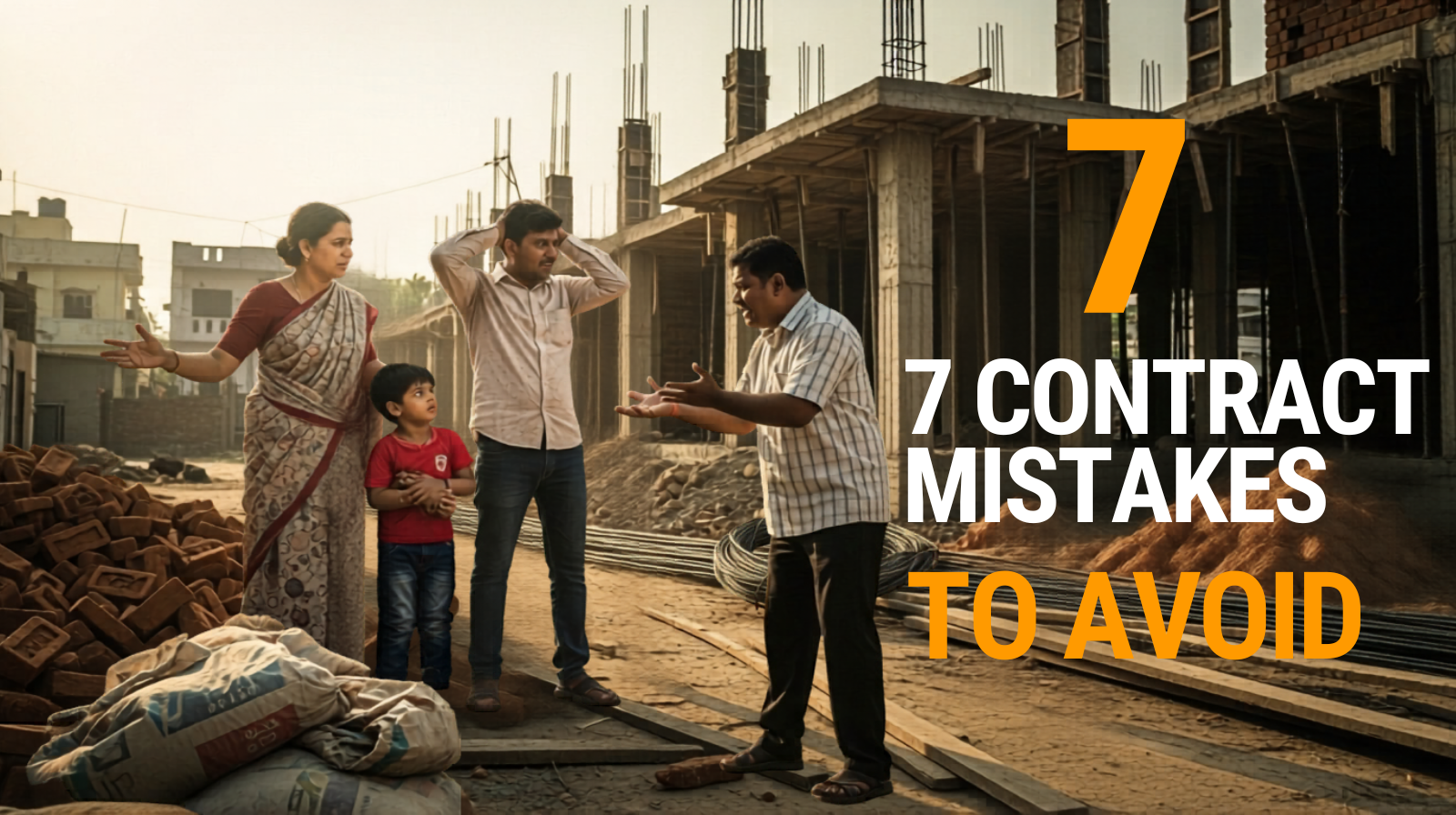
Building a house is one of the biggest financial and emotional decisions you’ll ever make. A well-drafted house construction agreement protects your money, time, and dream home. Unfortunately, most homeowners in Nepal and India sign agreements without fully understanding the risks and end up facing disputes, delays, cost overruns, or poor-quality work.
Here are the 7 most common mistakes people make when signing a house construction contract -and exactly how to avoid them in 2026:
1. Not Having a Written House Construction Agreement at All
Many people still rely on verbal promises or a simple handshake deal.
Mistake: Without a proper written contract (House Construction Agreement), there is no legal protection if things go wrong.
Solution: Always insist on a detailed, signed house construction agreement before any work or payment begins.
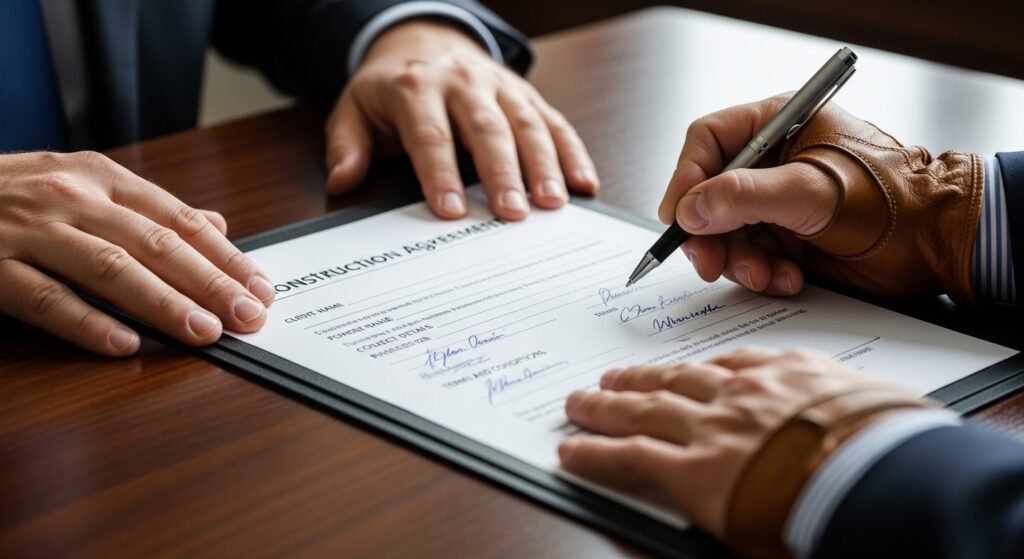
2. Vague Scope of Work
The agreement(House Construction Agreement) only says “build a 4-bedroom house” without specifications.
Mistake: This creates endless confusion about what is included (materials, finishes, electrical points, plumbing, etc.). Solution: Demand a clear Bill of Quantities (BOQ) and detailed drawings attached to the contract.
3. Unclear Payment Schedule
Paying too much upfront or in large lumps without milestones.
Mistake: You lose leverage if the contractor delays work or compromises on quality.
Solution: Tie payments strictly to verifiable stages (e.g., 10% after foundation, 20% after plinth, etc.) with joint inspection before each release.
For Proper payment schedule use our free tools.
You will love to read “The Square Foot Trap”
4. No Clear Timeline with Penalty Clause
The contract mentions “6 months” but has no start date, completion date, or consequences for delay.
Mistake: Projects stretch for years, causing huge financial and mental stress.
Solution: Include a detailed work schedule with reasonable penalties (liquidated damages) for delays caused by the contractor.
5. Ignoring Material Specifications and Brand Approval
The contract (House Construction Agreement)says “good quality materials” without naming brands or grades.
Mistake: Contractors often use cheap or substandard materials to increase their profit.
Solution: Specify exact brands, grades, and quality standards (e.g., cement: Nepal OPC/PPC, steel: Fe500, etc.) and include a right to approve/reject materials.
6. No Provisions for Changes & Variations
Any design change or extra work leads to fights over cost.
Mistake: Verbal approvals for changes create disputes later.
Solution: Add a clear Variation Clause stating how changes will be documented, priced, and approved in writing.
7. Skipping Important Legal & Safety Clauses
Missing clauses on warranties, defect liability period, insurance, force majeure, dispute resolution, or earthquake-resistant standards.
Mistake: You remain exposed to risks even after the project is “completed.”
Solution: Include:
-
- 12–24 months Defect Liability Period
-
- Quality guarantee
-
- Insurance requirements
-
- Arbitration clause for disputes
-
- Compliance with Nepal Building Code (NBC) and earthquake-resistant design
Final Tips for 2026:
-
- Always get the agreement reviewed by a lawyer experienced in construction contracts.
-
- Attach detailed architectural & structural drawings, BOQ, and material specifications.
-
- Use a professional platform like pro.nirmansutra.com for accurate quantity estimation before finalizing the contract.
-
- Never pay more than 10–15% as advance.
A strong construction agreement doesn’t show distrust -it shows you value your hard-earned money and your dream home.
FAQ : House Construction Agreement
1. Is a written house construction agreement really necessary in Nepal?
2. What documents should be attached to the construction agreement?
Detailed architectural and structural drawings (Naksa)
Bill of Quantities (BOQ)
Material specifications and approved brands
Work schedule and milestone timeline
Approved building permit (if already obtained)
2 thoughts on “House Construction Agreement: 7 Costly Mistakes to Avoid in 2026”