
Home Construction Process Part 1: From Land Selection to Permit Approval
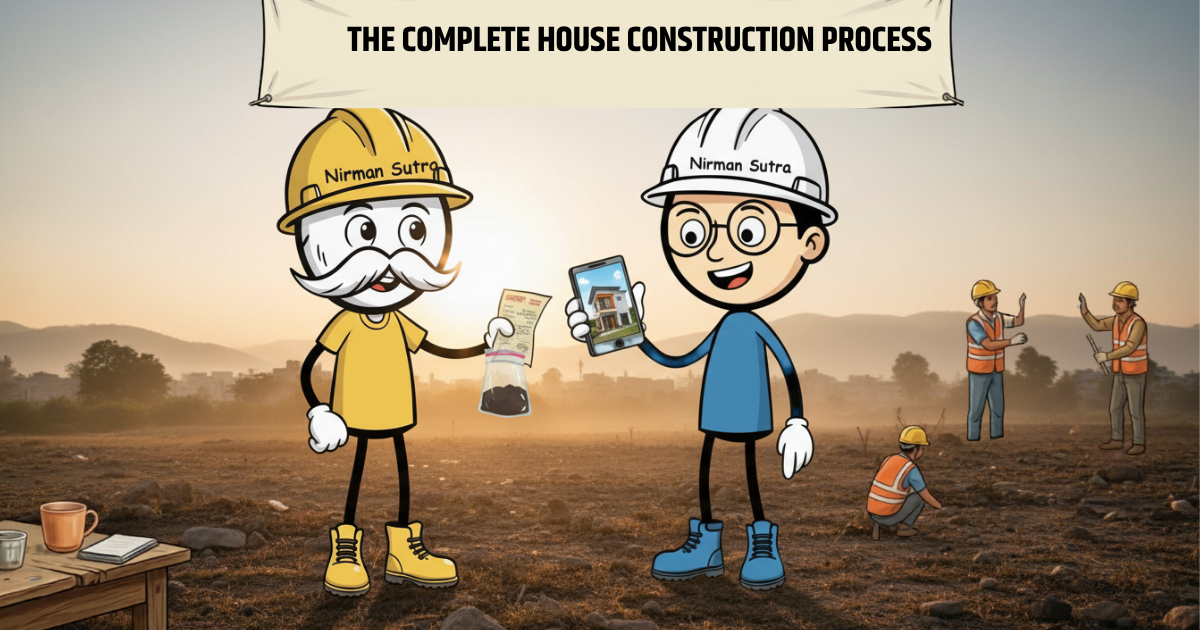
The morning sun hits the site. Contractor Kaka sits in his chair, tea in hand. Engineer Babu arrives, carrying a fresh drawing board.
“Kaka, today we’re covering all 16 steps of the construction process. But we’ll do it in parts. In Part 1, we cover the first four steps-from land selection to architectural design. I’ll handle the Planning side (NBC, IS Codes, budgeting, and bylaws), and you provide the Practical Site Tips.”
Kaka laughs. “Babu, college books are great, but ‘Planning’ alone doesn’t build a house. One mistake during land selection can sink millions. Today, I’ll show you how to bridge Planning with Construction. Let’s start with 26 years of experience-this is your complete guide to the home construction process.”
In this first installment, we break Home Construction Process Steps 1 through 4:
- Step 1: Land Selection & Legal Verification
- Step 2: Soil Testing & Land Survey
- Step 3: Budget Estimation & Cost Planning
- Step 4: Architectural Design & Layout
Engineer Babu explains the technical side (NBC 105:2025 updates), while Contractor Kaka shares real-life site tips and pitfalls to avoid. This guide is based on the 2026 Nepal market and the latest seismic design standards.
Step 1: Land Selection & Legal Verification
On-site, Engineer Babu spreads out a map while explaining things to the homeowner. Contractor Kaka watches from a distance and chimes in: “Babu, the land might look beautiful, but if you don’t understand the hidden legal ‘mess’ and the engineering ‘punches,’ the owner is going to break a sweat later!”
Babu points to the boundary on the map: “Exactly, Kaka. Choosing the land is the actual foundation of construction. We must have a checklist for these technical and legal points:”
- Municipal Bylaws: You must follow zoning rules according to NBC 105:2025. The Ground Coverage Ratio (how much land you can build on) and FAR (Floor Area Ratio) determine your home’s height and spread.
- Legal ‘Post-mortem’: Don’t just look at the Lalpurja (Title Deed). Verify the seller’s citizenship, tax clearance, and ensure there are no mortgages or encumbrances on the land.
- Chain of Ownership: Check the records for the last 20–30 years to ensure there are no future inheritance or ownership claims.
- Setbacks & Roads: Check with the municipality on how many feet you must leave based on road width. If you don’t have enough parking space, your blueprints won’t get approved.
Contractor Kaka adds from his experience: “Babu spoke from the books; now hear the site reality. I’ve seen many owners stop work for six months because of boundary disputes with neighbors after buying the land.”
- The Importance of a Licensed Surveyor (Amin): The land on the map and the land on the ground are often different. Get an Actual Plot Measurement done early. When you drive the boundary stakes, keep the neighbors present so there are no disputes later.
- Site Condition: Check the topsoil, drainage patterns, and proximity to rivers or cliffs. In crowded areas like Kathmandu, a setback error might mean you can only build on 50% of your land.
Practical Tip: When buying land in 2026, don’t hesitate to spend Rs. 25,000 to 100,000 on surveys and legal checks. This small investment saves millions and avoids massive mental stress later.
Step 2: Soil Testing & Land Survey
Babu: “This is the most critical planning step. NBC 105:2025 is clear—designing a foundation without knowing the Soil Bearing Capacity is like shooting an arrow in the dark. We use a Geotechnical Investigation to find:”
- Soil Bore Test: Drilling to see what kind of soil lies beneath at various depths.
- Bearing Capacity: How many kilograms per square meter can your soil hold? This determines how many floors you can safely build.
- Water Table Level: If the water level is high, you’ll need specialized waterproofing and dewatering during the foundation phase.
Kaka’s Site Experience: “Babu, if you dig without a soil test, the house could tilt within five years. On one site with a high water table, we put in isolated footings without testing. After the slab was poured, the house started sinking. We had to spend Rs. 1.5 million to install a Pile Foundation. Now, I always call a professional Geotechnical Engineer. Skipping this step is a gamble you’ll lose.”
Step 3: Budget Estimation & Cost Planning
Sitting by the site, Engineer Babu is on his tablet calculating costs with Pro Calculators. Kaka sips his tea: “Babu, will the owner’s budget actually hold up? The price of steel and cement is sky-high!”
Babu: “That’s why we need scientific planning. Based on the 2026 Nepal Market, we categorize budgets like this:”
| Category | Cost (per sq. ft.) | Description |
| Economy | Rs. 3,000 – 4,000 | Local materials, basic finishing. |
| Standard | Rs. 4,000 – 5,500 | Quality branded materials, modern look. |
| Premium | Rs. 5,500 – 7,500+ | Imported tiles, smart home systems, false ceilings. |
“A budget isn’t just sand and cement. You have to include Indirect Costs like design fees (3–5%), government permits, and utility connections. Most importantly, always keep a 15–20% Contingency Fund for unexpected expenses.”
Kaka’s Pro-Tip: “Babu is right. Most people run out of money during finishing because they didn’t have a contingency. My advice? Use Bulk Purchasing. Buy your steel and cement when prices dip. Also, Management is key. You can save 10% by hiring labor directly, but only if you have the time to supervise. If not, an experienced contractor is cheaper because they reduce material wastage.”
Step 4: Architectural Design & Layout
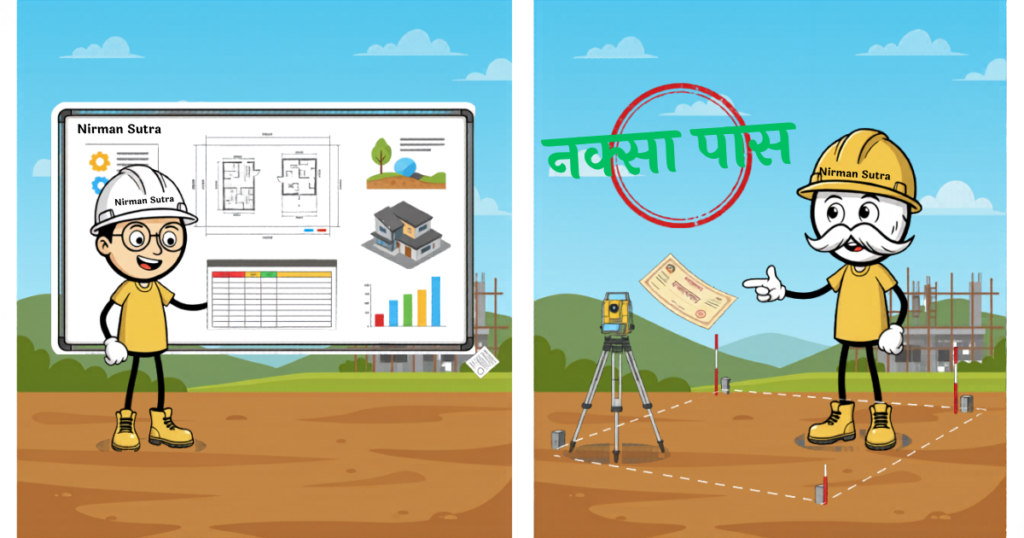
In the site shed, Babu gives the owner a “virtual tour” using a 3D Model from Nirman Sutra. Kaka peeks over: “In my day, we built entire houses based on a single hand-drawn sketch!”
Babu: “Design is the soul of the house, Kaka. We focus on:”
- Floor Planning: It’s not just about room size; it’s about storage and “circulation” (how you move through the house).
- Light & Ventilation: Positioning windows to catch the SE sun and breeze to save on energy.
- Complete Drawing Set: You need more than just a map for the permit; you need electrical, plumbing, and structural layouts to work on-site.
Kaka: “I’ve seen houses where 10 feet of land was wasted just on long, useless corridors. My advice to owners: Freeze the Design. Finalize everything before the foundation is poured. If you start saying ‘let’s add a window here’ after the walls are up, you’ll destroy your budget with ‘Change Orders’.”
Summary: The 2026 Planning Checklist
- Step 1-2 (Legal & Soil): Budget approx. Rs. 1–2 Lakhs.
- Step 3 (Budget): Full construction planning (60–80 Lakhs for an average 1500 sq. ft. home).
- Step 4 (Design): Professional fees approx. Rs. 2–3 Lakhs.
Conclusion
Kaka finishes his tea: “Babu, these first four steps are 50% of the success for Home Construction Process. You handled the planning; I’ll handle the construction. In the next episode, we move to Steps 5–8: Structural Design to Site Preparation.”
Have a question about your land / Home construction Process? Comment below!
- Use our Material Calculator at tools.nirmansutra.com
- Message us for a full BOQ (Bill of Quantities) for your project and Home Construction Process.
Did you read Stop Wasting Money! Footing Concrete Calculation Nepal (2026 Guide) – Nirman Sutra
FAQs about House Construction Process
What should I check before buying land?
Legal: Ensure you verify the Lalpurja (Title Deed), tax clearance, and that there are no ongoing ownership disputes.
Technical: Conduct a Boundary Survey to match the map with the actual field and check local Zoning Rules to see what kind of structure is permitted.
Is a 3D Design mandatory?
Technically, no-but it is highly recommended. A 3D model helps you visualize the final result, making it much easier to catch design flaws and prevent costly construction mistakes before they happen.
Can I start construction without a Naksa Pass (Building Permit)?
Absolutely not. Starting without an approved permit will lead to a Stop Order from the municipality, heavy fines, and potential legal complications that could halt your project indefinitely.
2 thoughts on “Home Construction Process in Nepal Part 1: From Land Selection to Design with Legal Advice”